GTA 6's Vice City in 2026 vs. 1986: What's Changed
GTA 6 sends players back to Vice City, but forty fictional years have passed since Tommy Vercetti's 1986. Here is what the trailers and Rockstar's own history confirm has changed, and what has not.
GTA 6 is sending players back to Vice City, but the calendar has moved on. Tommy Vercetti's Vice City was frozen in 1986. Jason and Lucia's Vice City is set in the present day, roughly forty years later. Rockstar has rebuilt the same fictional Miami from the ground up to match that gap, and the trailers, the confirmed setting details and the studio's own track record all point to a city that looks, sounds and functions very differently even as it stays recognizably the same place.
Here is what has actually changed between 1986's Vice City and the 2026 version, and what Rockstar has kept exactly the same on purpose.
The essentials:
- GTA Vice City (2002) is set in 1986, at the height of Miami's real-world cocaine boom and the "Cocaine Cowboys" era.
- GTA 6 moves the clock forward to a modern-day setting, confirmed by phones, traffic, fashion and infrastructure shown in every trailer.
- The city is now part of a much larger state, Leonida, rather than the whole map on its own.
- Landmarks like Ocean Beach, Starfish Island and Vice Point return in updated form, keeping the geography recognizable.
- The protagonist model changes too: one outlaw in 1986, a criminal couple in 2026.
Two Vice Cities, one Miami
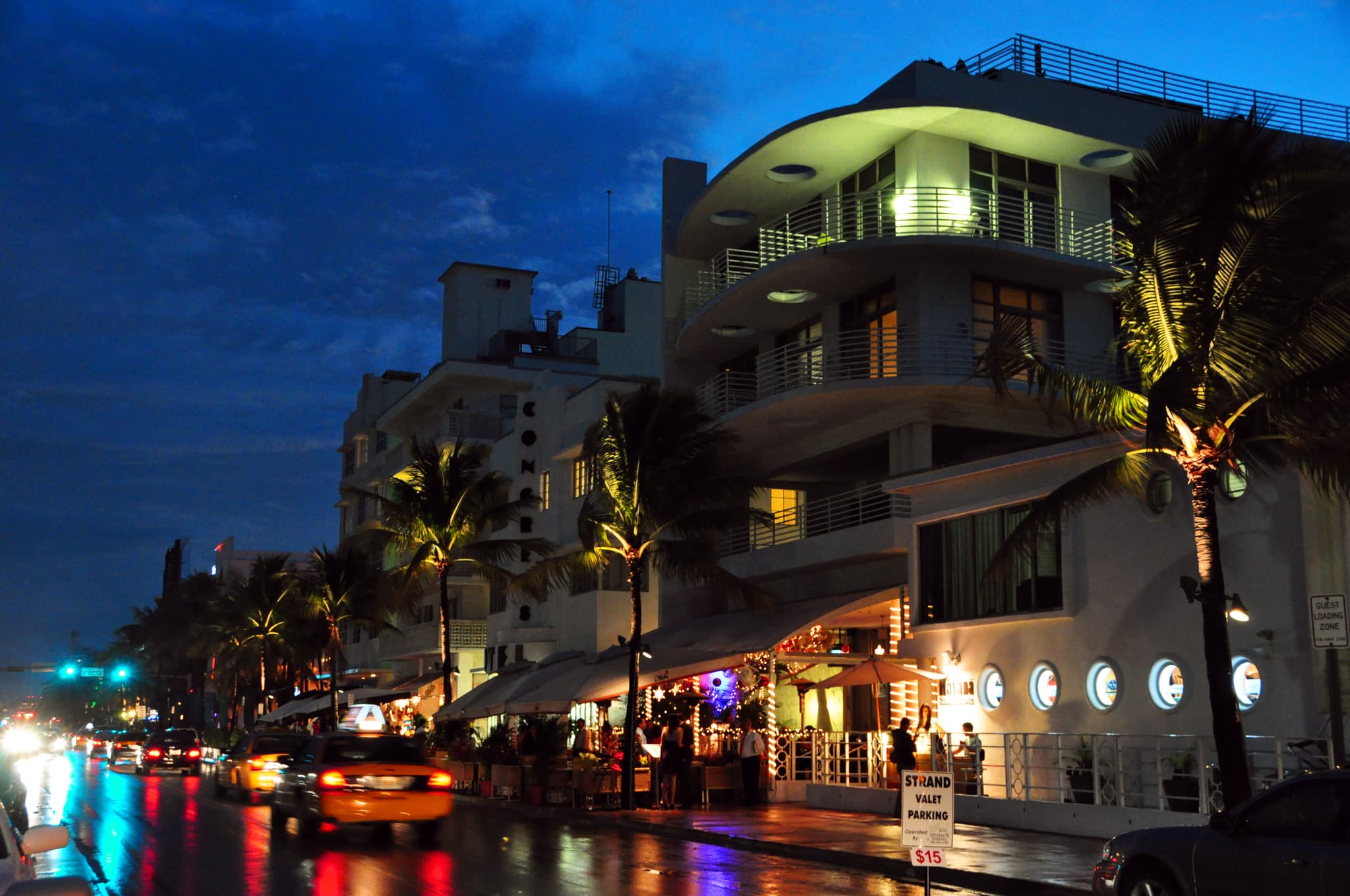
Both games draw from the same real place. The 1986 Vice City was built around the Miami of Scarface and Miami Vice: neon-lit Art Deco hotels, speedboats, and a skyline still dominated by low-rise pastel buildings. Rockstar's research team spent time in Miami in the late 1990s photographing that exact period, then compressed it into Ocean Drive expies, the Vice City Tower riff on the real Miami Tower, and a version of the Colony Hotel renamed the Colon Hotel.
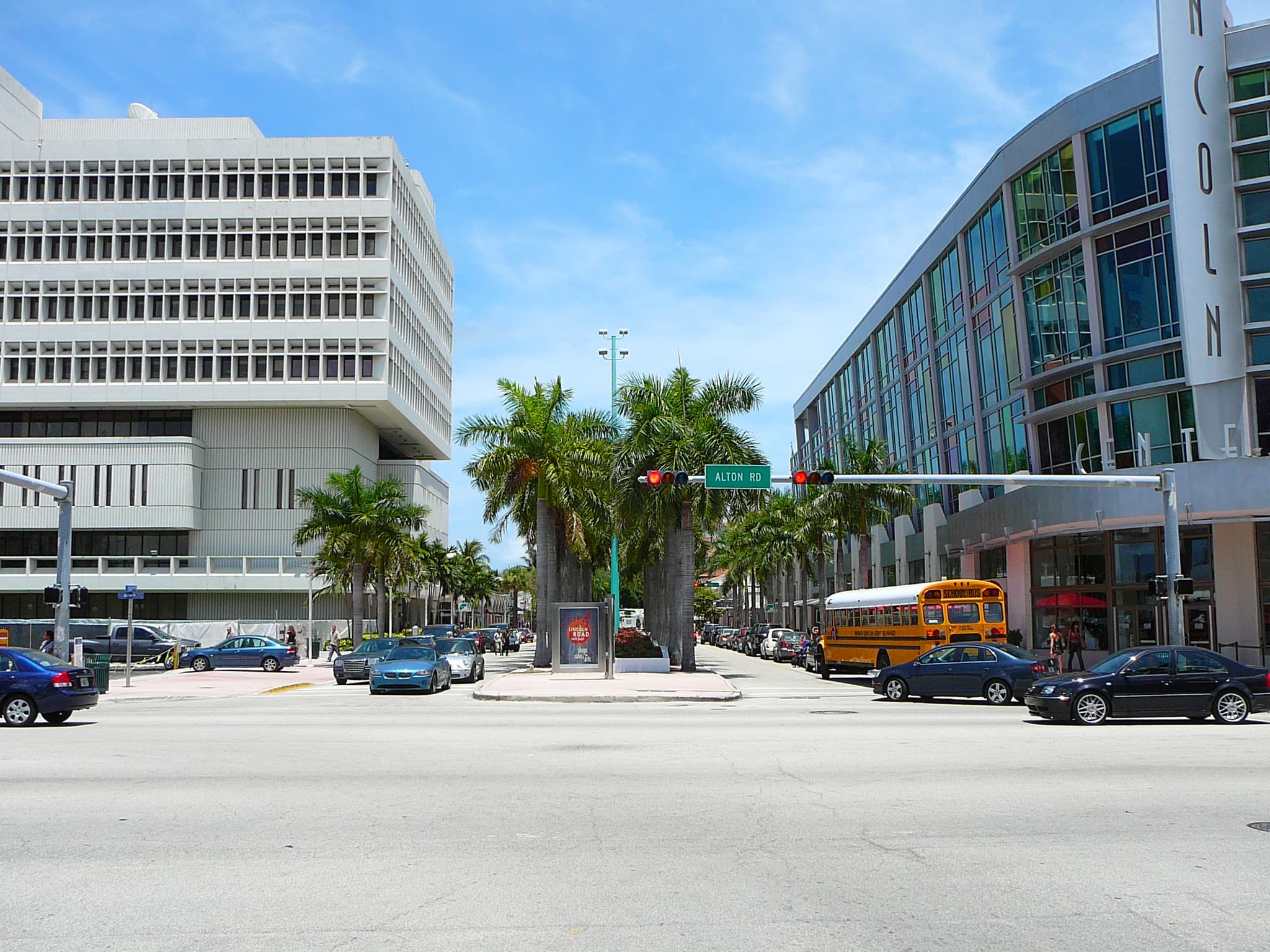
GTA 6's Vice City is built from a present-day version of the same city. Miami in 2026 has a denser downtown skyline, more high-rise condo towers along the water, and a bigger, more built-out metro area than it had in the 1980s. Rockstar's trailers show that growth directly: taller buildings behind the same stretch of beachfront, more traffic density, and a city that reads as lived-in and current rather than retro. The bones are the same. The city that grew on top of them is not.
The year changes everything else
Setting a game in 1986 versus 2026 is not just a cosmetic choice, it changes what the city is even about. Vice City's 1986 was built around a very specific real-world moment: Miami as the main entry point for cocaine trafficking into the United States, a period of violent turf wars, and a boomtown economy built on drug money laundered into hotels, nightclubs and real estate. That backdrop shaped Tommy Vercetti's entire story, from the drug deal gone wrong that opens the game to the property empire he builds by its end.
Forty years later, that specific criminal economy is history, and GTA 6's Vice City reflects a different, more contemporary set of crimes: influencer culture, gig-economy hustles, organized retail theft, and the kind of internet-era grift that didn't exist in 1986. Rockstar has been explicit that Jason and Lucia's story leans into modern true-crime and viral-fame themes rather than recreating the cocaine-trafficking plot beat for beat. The setting still runs on crime and excess, but the specific flavor of both has moved with the times.
Technology and culture did most of the visible work
Walk through the two versions of the city and the technology gap is the fastest way to tell them apart. 1986's Vice City has payphones, boomboxes, cassette-tape radio stations and cars without a single digital display. Police work with radios and paper files. News travels through print and television.
2026's Vice City runs on smartphones, in-car touchscreens, social media, and the kind of always-on surveillance and livestreaming culture that defines modern Florida news cycles. Rockstar's own marketing has leaned into this: the trailers show characters filming themselves, viral videos, and a media ecosystem that treats crime as content. Fashion, music and vehicle design shift the same way, trading the neon-and-pastel 1980s look for a more current, hyper-saturated take on modern streetwear and car culture. The satire is still aimed at America, it just aims at a different decade of it.
Same streets, new skyline
Rockstar didn't throw out the old map, it aged it up. Several neighborhoods from the original Vice City are confirmed or strongly implied to return in updated form:
- Ocean Beach, the old boardwalk and beachfront strip, reworked as a busier, more built-up modern beach district.
- Starfish Island, home to Tommy Vercetti's mansion in 2002, visible in aerial trailer shots with a similar layout but a denser, more modern set of properties.
- Vice Point, the original game's upscale district, reappearing as part of the wider confirmed neighborhood list.
- Little Haiti, name-checked by Rockstar among the confirmed districts, tying the map directly back to the cultural geography of the original game and the real Miami it's modeled on.
The result is a city that longtime players can navigate by memory in places, while newcomers experience it as a fully modern, much larger metropolis. For a full breakdown of how the map is organized, see the guide to Leonida's confirmed regions.
One outlaw vs. two, and a much bigger stage
Tommy Vercetti worked alone, climbing from street-level dealer to crime boss over the course of one game set in one city. GTA 6 splits that role between two protagonists, and expands the map around them into a full state rather than a single metro area. The city itself has also grown: multiple size estimates put GTA 6's world at roughly double the footprint of GTA 5's Los Santos, with Vice City functioning as the dense urban core of a much larger sandbox rather than the entire playable area. The comparison to previous Rockstar open worlds is broken down in how GTA 6's map size stacks up against GTA 5 and Red Dead Redemption 2.
That scale shift matters for the 1986-versus-2026 comparison too. The original Vice City was compact enough to feel like a single, controlled criminal underworld. The modern version spreads that same energy across wetlands, suburbs and neighboring cities, matching the sprawl of real 2020s Florida rather than the more contained Miami of the 1980s.
What Rockstar kept exactly the same
For all the technology, scale and cultural shifts, the tone hasn't moved. Both versions of Vice City are built as exaggerated, satirical takes on Florida and American excess: garish wealth next to street-level desperation, a media landscape obsessed with crime, and a cast of characters who are all, in one way or another, running a hustle. The trailers have already given fans plenty to pick apart, documented in the running list of small details fans have spotted across the GTA 6 trailers, several of which echo specific jokes and landmarks from the 1986 game.
That continuity is deliberate. Rockstar is not asking players to forget the original Vice City, it is asking them to imagine what happened to that city over the following four decades: the same coastline, the same underlying culture of hustle and spectacle, rebuilt for a very different America. For the full picture of what's confirmed about the story itself, see the breakdown of everything known about GTA 6's plot so far.
Vice City then and now, side by side
| Vice City, 1986 | Vice City, 2026 | |
|---|---|---|
| Real-world basis | 1980s Miami, cocaine-boom era | Present-day Miami metro area |
| Protagonist(s) | Tommy Vercetti, solo | Jason and Lucia, a duo |
| Map scope | The whole playable city | Urban core of the larger state of Leonida |
| Technology | Payphones, radios, cassette tapes | Smartphones, livestreaming, touchscreens |
| Dominant crime theme | Drug trafficking and turf wars | Modern grift, viral crime, organized theft |
| Confirmed shared landmarks | Ocean Drive, Starfish Island, Vice Point | Ocean Beach, Starfish Island, Vice Point, Little Haiti |
Vice City was always a snapshot of a specific Florida moment dressed up as fiction. GTA 6 is proof that Rockstar can update that snapshot without losing what made the original recognizable in the first place, even forty fictional years later.
Comments (0)
No comments yet. Be the first!