The 2013 GTA Online Car Duplication Glitch, Explained
GTA Online's launch-era car duplication glitch let players clone garaged vehicles by timing a Mors Mutual insurance claim against a stolen car. Here is how the exploit worked, why it took Rockstar months to kill it, and what it started.
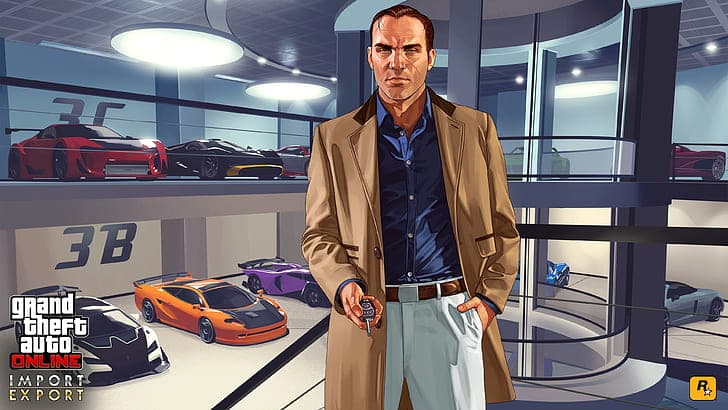
GTA Online launched on October 1, 2013, with a broken economy: missions paid pennies, cars cost millions, and the servers barely worked. Within weeks, players had found a way around all of it. The glitch used a personal garage and a Mors Mutual Insurance claim to trick the game into keeping two copies of the same car, one to drive and one to sell. It became the first real "money glitch" in GTA Online history, and it set the pattern every duplication exploit since has followed.
The essentials:
- Discovered within the first month of GTA Online (October-November 2013)
- Exploited a timing conflict between an insurance claim payout and a vehicle entering a personal garage
- Let players duplicate any garaged car, then sell the copy at Los Santos Customs for a quick payday
- Patched through a series of Title Updates, alongside a wider December 2013 crackdown on modded stats
- Does not work today; Rockstar has closed this specific method and dozens of descendants since
What Was the 2013 Car Duplication Glitch?
At launch, GTA Online gave every player one small garage and almost no way to earn real money fast. Heists did not exist yet, and most missions paid out a few hundred to a few thousand GTA dollars. Players who wanted a Duke O'Death or an armored Kuruma had to grind for hours, or find a shortcut.
The shortcut players found exploited two systems that were never meant to interact: the personal garage, which saves a vehicle's state the instant it rolls through the door, and Mors Mutual Insurance, the in-game service that refunds a car's value if it is destroyed or stolen. Individually, both systems worked as intended. Triggered at the exact same moment, they caused the game to write two records for one car instead of overwriting the original.
How Did the Garage and Insurance Method Actually Work?
The version most commonly described by players who used it in 2013 followed a specific sequence:
- Park the target car (often a cheap, disposable vehicle like the Benefactor Panto) inside a personal garage with several free slots.
- Destroy that parked car, typically with a sticky bomb, so it registers as "totaled" rather than simply stolen.
- Steal a second, unrelated car from the street and call Mors Mutual Insurance to file a claim on the original vehicle.
- Drive the stolen street car back toward the garage entrance while the insurance payout screen is loading.
- Time the car's entry into the garage to land in the same instant the insurance claim confirms.
If the timing lined up, the game processed the garage save and the insurance replacement in the same tick. The result: the original vehicle reappeared in the garage as if nothing had happened, the insurance payout still landed, and in many reported cases a duplicate of the car ended up sitting in the job lobby or a second garage slot, ready to be resold. It was fussy, required repeated attempts to land the frame-perfect timing, and worked best solo, away from other players who might destabilize the session.
Why Did It Take Rockstar So Long to Patch?
GTA Online's first months were rough on the back end. Rockstar was fighting server outages, disappearing character progress, and hackers using external tools to spawn cash directly, all at the same time as the humble garage-and-insurance dupe. The company even handed every early player a GTA$500,000 goodwill payment in October 2013 to make up for the launch problems, which briefly made a slow, manual duplication method look almost pointless next to what modders could do with a save editor.
That changed once modding tools got patched out and cash injection became harder. The garage dupe, slow as it was, became one of the more reliable ways to build wealth without an external device. Rockstar responded the way it still does today: silent, incremental Title Updates that closed the exact frame-timing window, followed by broader garage and insurance code rewrites that made the original sequence impossible to reproduce.
What Happened After the Glitch Was Patched?
Patching the glitch itself was only half the story. In December 2013, Rockstar wiped the stats of accounts it identified as using illegitimate methods to inflate cash and Reputation Points, whether through the garage dupe, other exploits, or outright save editing. Legitimate players who had simply been playing normally were, in some well-documented cases, caught up in the same sweep, which became one of the earliest controversies of the GTA Online era. It also set a precedent Rockstar has repeated ever since: patch the exploit first, then go back and claw back the proceeds.
Does the 2013 Duplication Glitch Still Work?
No. The specific garage-and-insurance timing window from 2013 has been closed for years, and the underlying vehicle-save systems have been rewritten multiple times since, most notably around the introduction of the Mobile Operations Center, Import/Export, and the Cayo Perico-era vehicle warehouses. None of the original 2013 steps produce a duplicate car in the current build of GTA Online.
That does not mean duplication glitches disappeared. They just moved to whatever new vehicle-storage system Rockstar had most recently shipped.
| Era | What got exploited | How Rockstar answered |
|---|---|---|
| 2013 (launch) | Garage save vs. Mors Mutual insurance claim timing | Title Update patches, plus a December 2013 stat wipe for illegitimate accounts |
| 2015 | Business property and clubhouse vehicle transfers | Server-side fixes within following updates |
| 2017-2018 | Import/Export source vehicle resale timing | Patched alongside heist and DLC updates |
| 2020 | Mobile Operations Center (MOC) vehicle dupe | Closed via an October 8, 2020 background update |
| 2020s | Session-swap and sell-limit workarounds tied to newer garages | Recurring background patches and daily sell caps |
For the full run of exploits that defined this period, see our history of GTA Online's 2013-2014 money glitches.
The 2013 Dupe's Real Legacy
The garage-and-insurance glitch did not last long, but it set the template that GTA Online's economy has run on for over a decade: a patch closes one door, players find the next weak seam in whatever new system Rockstar just added, and the cycle repeats. It is also a useful reminder of how young the game's economy was at launch. GTA Online in late 2013 barely resembled the heist-and-business simulator it became a few years later, and glitches like this one were often the only way players could keep pace with prices that assumed an economy that did not exist yet.
If you are curious about what else was going on in GTA V and GTA Online around this period, our guide to the GTA 5 Blue Hell glitch covers another launch-era discovery, and the complete list of GTA 5 PS3 cheat codes rounds up the legitimate, developer-sanctioned shortcuts from the same era. For a broader tour of what players found hidden in the base game, the GTA 5 easter eggs guide is worth a look too.
Comments (0)
No comments yet. Be the first!