GTA 5 Graphics in 2013: Why It Was So Impressive
GTA 5 launched in 2013 on eight-year-old PS3 and Xbox 360 hardware, yet looked like nothing else on the market. Here's how Rockstar's RAGE engine, a $265 million budget, and a 1,000-person team pulled it off.
GTA 5 launched on September 17, 2013, on hardware that was already eight years old: the PlayStation 3 and Xbox 360, consoles built around 512MB of RAM and processors designed in 2005. Yet critics and players alike agreed it looked like nothing else on the market. The reason wasn't a hardware trick - it was Rockstar's RAGE engine pushed to its absolute limit, a production budget north of $265 million, and a design team willing to rebuild core rendering systems from scratch.
The essentials:
- Released September 17, 2013, on PS3 and Xbox 360 - consoles with 512MB of RAM total
- Built on a heavily reworked version of Rockstar's RAGE engine, using deferred shading for hundreds of simultaneous dynamic lights
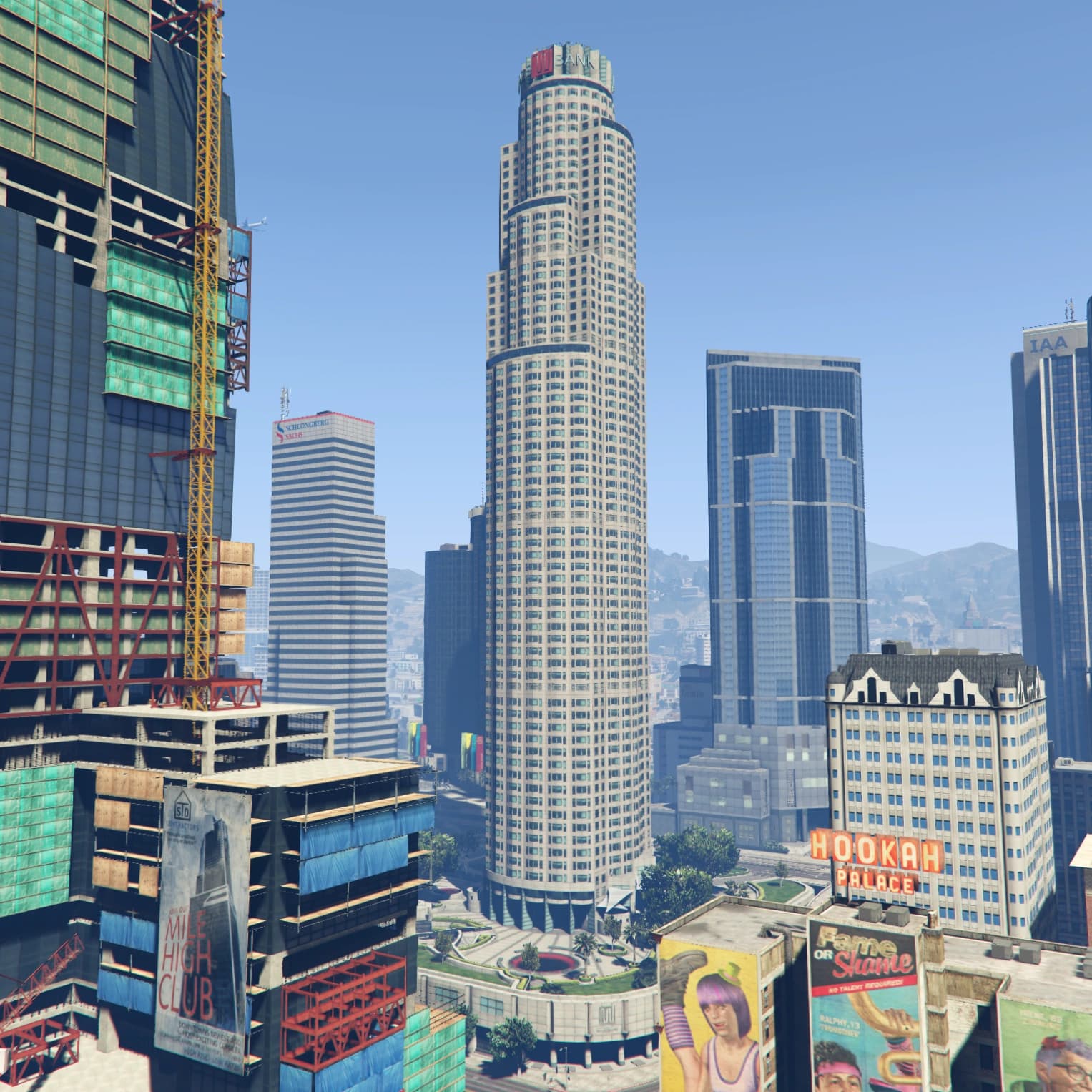
- Draw distance covered the entire map of Los Santos and Blaine County, visible from nearly any high point
- Development and marketing cost an estimated $265 million, with a core team of 360 at Rockstar North backed by over 1,000 people across six studios
- IGN and most outlets called it a "masterpiece," repeatedly noting how far it pushed seventh-generation hardware
Why did GTA 5 look so far ahead of its hardware?
The PS3's Cell Broadband Engine and the Xbox 360's tri-core CPU were not built with modern open-world rendering in mind, and both consoles shared just 512MB of combined RAM - less than a single high-resolution texture pack today. Rockstar's answer was to squeeze every cycle out of that budget through aggressive streaming: textures, geometry, and audio loaded in and out of memory continuously as the player moved, so nothing had to sit resident that wasn't immediately visible. That streaming discipline is what let Los Santos feel continuous, with no loading screens between the city, the countryside, and the ocean floor.
The RAGE engine: the real technical story
Rockstar's RAGE (Rockstar Advanced Game Engine) had already powered GTA IV and Red Dead Redemption, but for GTA 5 it was substantially retooled. The renderer moved to a hybrid deferred-shading pipeline, which separates the geometry pass from the lighting pass. In practice, that meant Los Santos could carry hundreds of dynamic light sources at once - streetlights, headlights, neon signage, muzzle flashes - without the frame rate collapsing, something forward-rendering engines of that generation struggled to match.
RAGE was paired with two other in-house systems that did most of the heavy lifting:
- Euphoria, a physics-driven animation engine that made every NPC and vehicle collision look procedural rather than scripted, reacting differently every time
- Face FX, which drove the lip-sync and facial animation for the three protagonists and hundreds of side characters, recorded through extensive motion and performance capture
A draw distance nobody else was attempting
Where most open-world games of 2013 faded the horizon into fog after a few hundred meters, GTA 5 rendered Los Santos, the mountains around Mount Chiliad, and Blaine County's desert simultaneously and in visible detail from almost any vantage point. Rockstar's engineers used a reversed Z-buffer to fight the depth-precision problems that normally appear when draw distances get that long, avoiding the flickering "z-fighting" that plagues distant geometry. Combined with level-of-detail streaming that swapped in simplified models for far-away objects, the result was a map you could see across in its entirety, something that felt closer to a next-generation showcase than a seventh-generation game.
Dynamic weather that actually changed the world
GTA 5's weather system went beyond particle effects on screen. Rain altered surface friction, so vehicle handling genuinely changed on wet asphalt; road surfaces picked up reflections in real time; and fog used volumetric ray-marching to scatter light through the air at multiple depths, a technique that was computationally expensive even on PC hardware of that era. None of that was necessary for a game to function - it was a deliberate bet that atmosphere would sell the world as a real place, and it worked.
The budget and team behind the visuals
None of this came cheap. Combined development and marketing costs are estimated at roughly $265 million, making GTA 5 the most expensive game produced up to that point. Rockstar North's core team of 360 people was backed by contributions from Rockstar's studios in Leeds, Lincoln, London, New England, San Diego, and Toronto - over 1,000 people in total. That scale is why the game could afford custom tools, months of motion capture, and a rendering pipeline built specifically for this one title rather than licensed off the shelf.
| What Rockstar built | Why it mattered |
|---|---|
| Deferred shading pipeline | Hundreds of dynamic lights without a frame-rate hit |
| Aggressive asset streaming | 512MB of RAM never had to hold more than what was on screen |
| Reversed Z-buffer | Long draw distances without z-fighting artifacts |
| Volumetric fog and dynamic weather | Wet roads, real fog scattering, weather that changes handling |
| $265M budget, 1,000+ staff | Custom tooling instead of off-the-shelf middleware |
How critics reacted in 2013
Reviewers were blunt about the gap between GTA 5 and everything else running on the same hardware. IGN handed the game its rare "Masterpiece" score, and outlet after outlet singled out the same detail: this was seventh-generation hardware doing things that felt like it belonged to the next console generation, which arrived just weeks later with the PS4 and Xbox One. Rockstar had effectively built a launch-day showcase for hardware that was about to be retired.
How did it compare to other 2013 releases?
2013 was a strong year for graphics on the outgoing consoles - The Last of Us and Tomb Raider both pushed visual fidelity hard - but those were far more linear, corridor-driven experiences that could budget their rendering around a small number of visible spaces at once. GTA 5 had to do the same trick while also simulating an open world dozens of square miles wide, with traffic, weather, and hundreds of pedestrians rendered continuously. That combination of scale and fidelity is what made the comparison feel unfair to everyone else shipping on the same hardware.
Quick answers
Did GTA 5 really run on the same PS3 that launched in 2006? Yes. The PS3 and Xbox 360 versions are the original release; the PS4, Xbox One, PS5, and Xbox Series versions came later with upgraded assets and lighting, not a different game.
What made the biggest visual difference at the time? Draw distance and lighting. Being able to see the whole map from a hilltop, fully lit and populated, was the detail most reviewers called out first.
Was any of this achieved through tricks that hurt gameplay? No - the streaming and level-of-detail systems were built specifically so players would never notice a load, which is why the world still feels seamless today.
The legacy: still holding up 13 years later
GTA 5 launched again on PS4, Xbox One, and PC with improved lighting and higher-resolution assets, then again on PS5 and Xbox Series X|S. The underlying RAGE architecture from 2013 scaled across four console generations without a full rebuild, which says as much about the original engineering as the initial reveal did. For a full breakdown of what changed release to release, see GTA 5 in 2013 vs Today: 13 Years of Evolution.
The graphics were only part of a bigger 2013 story. GTA 5 also broke every commercial record on the books - see Why GTA 5 Shattered Every Sales Record in 2013 - and the final game diverged in real ways from Rockstar's first look at it, covered in GTA 5: The 2011 Debut Trailer vs. the Final Game. Online launched weeks later on the same engine; what playing GTA Online was actually like in 2013 and the first cult cars players fell in love with round out the era.
Will GTA 6 repeat the trick?
Rockstar is applying the same philosophy to GTA 6 on a new generation of hardware, and early trailer analysis already points to a similar leap - see everything fans have spotted in the GTA 6 trailers for the details players have picked apart frame by frame. If 2013 is any indication, the studio doesn't just chase better hardware; it tends to build systems that outlast the console generation they launched on.
Comments (0)
No comments yet. Be the first!